Introduction
When planning vertical transport in a warehouse, factory, or commercial building, one of the first questions is whether you need a cargo lift or a freight elevator. While the two terms are sometimes used interchangeably, they serve different purposes, have different cost structures, and are subject to different regulations.
Understanding these differences helps you avoid overpaying for features you do not need — or under-specifying a solution that cannot handle your loads. This guide compares cargo lifts and freight elevators across the factors that matter most to buyers.
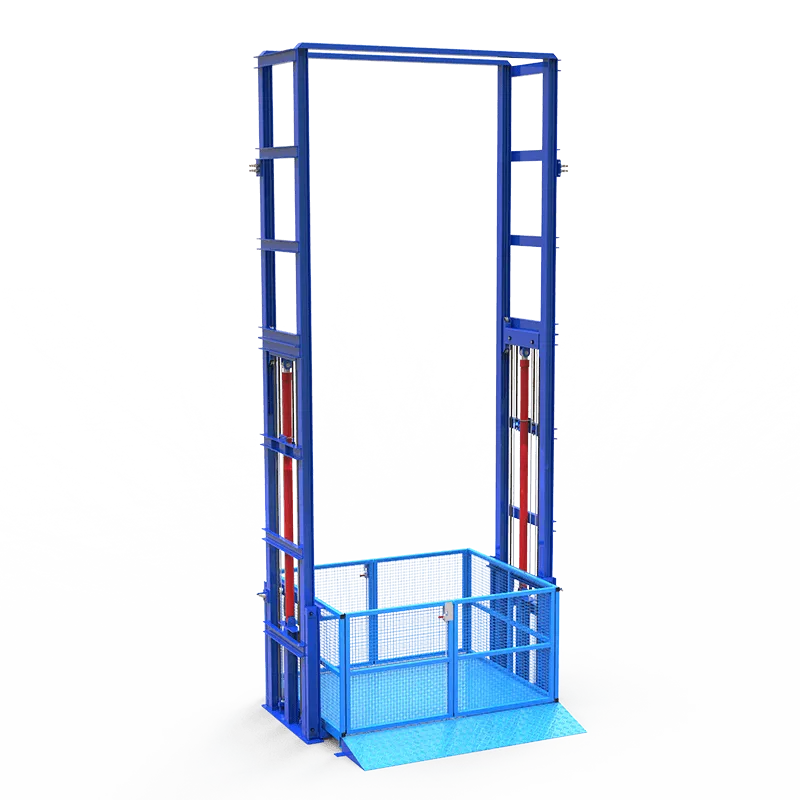
What Is a Cargo Lift?
A cargo lift, also known as a goods lift or guide-rail lift, is a hydraulic vertical transport system designed primarily to move goods between floors. It is built around a load-bearing platform guided by rails and driven by a hydraulic cylinder and power unit.
Cargo lifts are characterized by:
- Heavy load capacity: From a few hundred kilograms up to 30 tons.
- Moderate speed: Typically 4–6 meters per minute.
- Simple, rugged construction: Optimized for durability and cost-efficiency.
- Customizable platform: Size, travel height, and safety options tailored to the site.
Because they focus on goods movement, cargo lifts generally do not require the same level of passenger safety certification as elevators.
What Is a Freight Elevator?
A freight elevator (or goods elevator in commercial contexts) is a more standardized vertical transport system that moves goods, and sometimes personnel, within a building. Freight elevators often include a cab, doors, and control systems similar to passenger elevators, and may be required to meet building and safety codes.
Freight elevators are characterized by:
- Passenger-style cab: Enclosed car with proper doors and interlocks.
- Higher speed options: Faster travel for multi-floor commercial buildings.
- Compliance requirements: May need to meet local elevator codes and inspections.
- Higher cost: More components, stricter certification, and more complex installation.
Key Differences
Load Capacity
Cargo lifts often offer a wider range of heavy capacities, from 1 to 30 tons, with simple reinforced platforms. Freight elevators typically carry moderate loads and are optimized for mixed goods and light personnel use.
Speed
Cargo lifts run at a slower, steady speed (4–6 m/min), which is fine for goods. Freight elevators in commercial buildings may travel faster to serve busy floors.
Certification and Code
A cargo lift is usually classified as industrial material handling equipment and may not require full passenger elevator certification. A freight elevator used in a public or commercial building is more likely to be subject to elevator codes, inspections, and certification.
Installation
Cargo lifts are often easier and faster to install because they use a guide-rail structure with fewer building integration requirements. Freight elevators may require a machine room, deeper pit, and more structural work.
Cost
For the same load and travel requirements, a cargo lift is generally more affordable. The simpler design, fewer certified components, and easier installation all reduce the total cost of ownership.
Which One Should You Choose?
Choose a cargo lift when:
- Your primary need is moving heavy goods in a warehouse or factory.
- You want a cost-effective, easy-to-install solution.
- Travel heights are within the guide-rail range and loads are heavy.
- You do not need to transport personnel.
Choose a freight elevator when:
- You are serving a commercial building with multiple floors.
- You need faster travel or passenger-capable transport.
- Local regulations require elevator certification.
- The installation budget can accommodate a more complex system.
Why GP Lift Cargo Lifts Fit Industrial Needs
GP Lift manufactures guide-rail cargo lifts with up to 30-ton capacity and 15m lifting height, including two-post, four-post, and full-mesh configurations. With a 5-year structural warranty, optional safety features, and free CAD and 3D drawing design, they provide a practical and cost-effective alternative to freight elevators for most industrial applications.
FAQ
What is the main difference between a cargo lift and a freight elevator?
A cargo lift is typically a hydraulic guide-rail lift designed for lower speeds and heavy goods, while a freight elevator is a more standardized passenger-certified lift often used in commercial buildings.
Which is cheaper, a cargo lift or a freight elevator?
A cargo lift is generally more cost-effective for industrial and warehouse applications because it is simpler, easier to install, and does not require the same level of passenger certification.
Can a cargo lift be used to transport people?
Cargo lifts are designed primarily for goods. For personnel transport you should use a certified passenger or freight elevator that meets local safety regulations.