Introduction
Choosing the right hydraulic lift for your warehouse is a critical decision that impacts operational efficiency, worker safety, and long-term ROI. With so many options available — cargo lifts, scissor lifts, dock lifts, and custom platforms — it’s essential to understand your specific requirements before making a purchase.
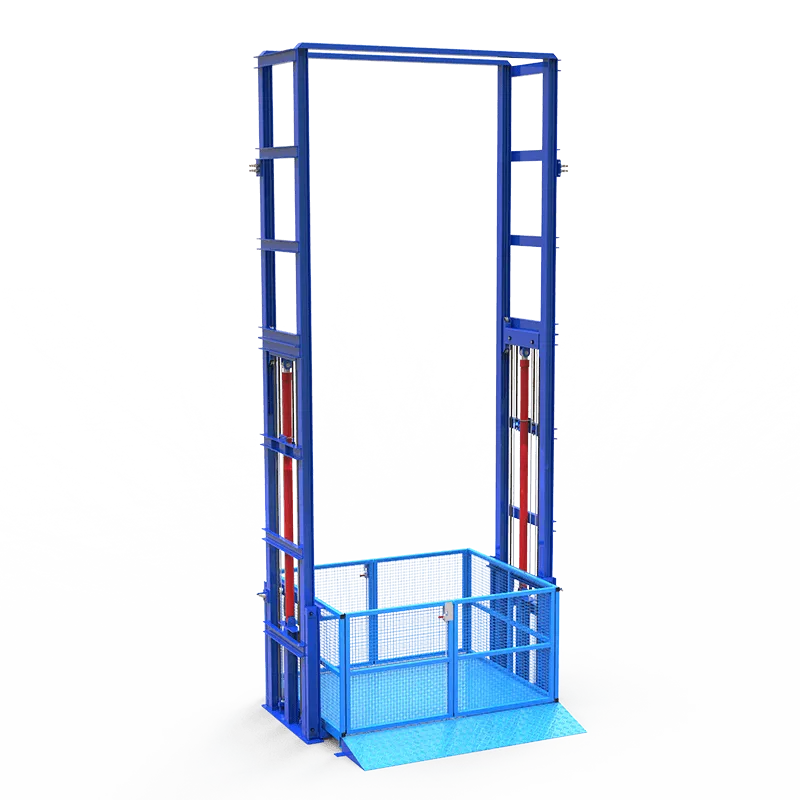
Key Factors to Consider
1. Load Capacity
The first and most critical factor. Calculate your maximum load weight including:
- The weight of the goods being transported
- The weight of pallets, carts, or containers
- A safety margin of 25-50% above your calculated maximum
Pro Tip: If you regularly handle 2-ton loads, choose a 3-ton capacity lift for safety and longevity.
2. Lifting Height & Travel
Determine your required vertical travel:
- Single-level access: 1-3 meters (dock lifts, scissor tables)
- Multi-floor: 5-15 meters (cargo lifts, freight elevators)
- Deep pit: 15+ meters (custom industrial lifts)
Consider future expansion — if you plan to add mezzanine floors or expand your warehouse, invest in a lift that can accommodate future needs.
3. Platform Size
Your platform should accommodate your standard cargo footprint:
- Standard pallet: 1200mm × 1000mm or 1200mm × 800mm
- Euro pallet: 1200mm × 800mm
- Industrial containers: Up to 6000mm × 2500mm
Always allow at least 200mm extra on each side for safe loading and unloading.
4. Installation Environment
Consider the physical constraints of your site:
- Indoor vs. Outdoor: Outdoor installations require weatherproofing
- Pit depth: Some lifts require a pit (150-250mm), others are pitless
- Ceiling height: Ensure adequate overhead clearance
- Floor loading capacity: Verify your floor can support the lift’s weight plus maximum load
- Power supply: Check voltage (380V/415V 3-phase is standard for industrial units)
5. Safety Features
Never compromise on safety. Essential features include:
- Emergency stop button
- Top and bottom limit switches
- Overload protection / warning alarm
- Safety interlock doors
- 1.4m minimum safety railing
- Emergency descent system (for power failure)
- Hydraulic explosion-proof valve
6. Maintenance & Service
A lift is a long-term investment. Consider:
- Warranty period: Minimum 1 year for electrical, 5 years for main structure
- Spare parts availability: Can you get replacement parts quickly?
- Technical support: Does the manufacturer provide remote support?
- Installation guidance: On-site or remote installation assistance
Types of Lifts Compared
| Type | Best For | Load Range | Lifting Height |
|---|---|---|---|
| Cargo Lift | Multi-floor warehouses | 1-30 tons | 3-15m |
| Scissor Dock Lift | Loading docks | 1-10 tons | 1-6m |
| Car Parking Lift | Garage parking | 2-5 tons | 2-6m |
| Car Turntable | Vehicle display | 2-5 tons | 360° rotation |
Final Checklist
- Calculated maximum load with safety margin
- Measured lifting height and platform size
- Verified installation site constraints
- Confirmed power supply availability
- Reviewed safety features list
- Checked warranty and after-sales support
- Obtained CAD drawings for your site
- Compared at least 3 suppliers
Get Expert Advice
At GP LIFT, we provide free professional consultation and custom 3D site design for all projects. Share your requirements with our engineering team, and we’ll recommend the optimal solution for your application.
FAQ
How do I choose between a cargo lift and a scissor lift?
Choose a guide rail cargo lift for tall multi-floor vertical transport, and a scissor lift for lower travel heights with loading dock or mezzanine applications.
What is the right lift for my warehouse?
Consider your load weight, lifting height, platform size, and whether you need vertical transport or dock loading to select the right lift type.
Can warehouse lifts be customized?
Yes, GP Lift provides custom platform size, lifting height, load capacity, and special features for warehouse and factory needs.