Introduction
Cargo lift pricing is one of the most common questions from warehouse and factory owners. Unlike a standard product with a fixed price, a cargo lift is a customized solution — the final cost depends on your specific load, travel height, platform size, and site conditions.
This guide breaks down the main cost components so you can budget accurately and avoid surprises when requesting a quote.
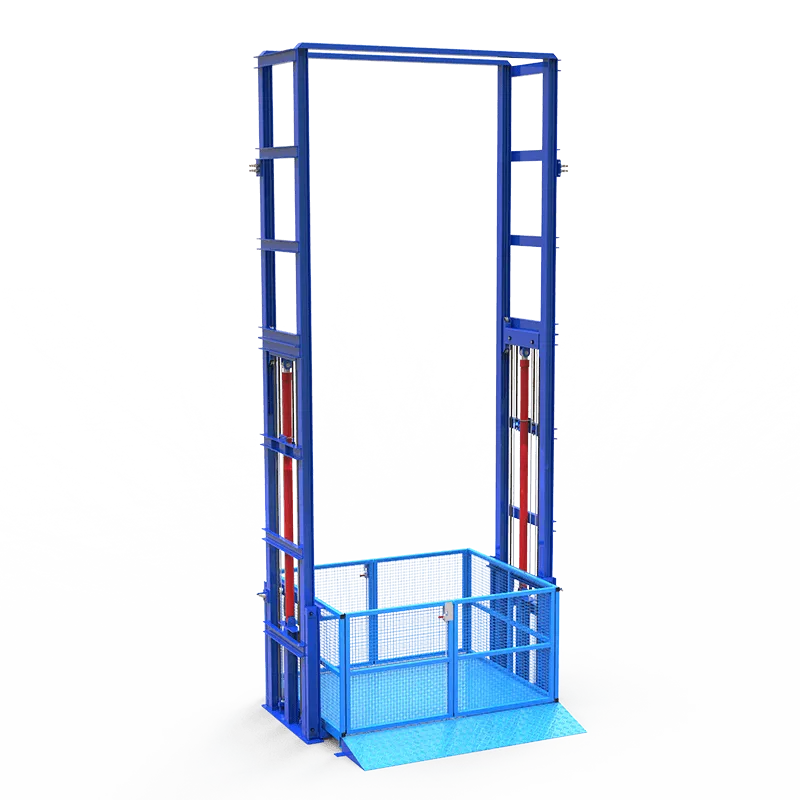
What Determines Cargo Lift Price?
1. Load Capacity
Load capacity is the single biggest driver of cost. A heavier capacity requires a stronger structure, a larger hydraulic cylinder and power unit, and reinforced platform and rails.
- 1 ton: Entry-level, compact design.
- 2–3 tons: Common for standard warehouse pallets.
- 5 tons: Heavy industrial use with larger platforms.
- 10 tons and above: Specialized heavy-duty systems.
2. Travel Height
Travel height directly affects the length of the guide rails, the cylinder stroke, and the hydraulic power required. A lift for a single floor (2–3m) is far cheaper than a multi-floor system reaching 10–15m.
3. Platform Size
Larger platforms need more steel, bigger rails, and a more powerful drive system. Standard pallet-sized platforms (1000×1000 mm to 2000×2000 mm) are the most economical, while extra-large platforms for forklifts or vehicles cost more.
4. Structure Type
- Two post: Usually the most economical for light loads.
- Four post: The standard, slightly higher cost for better stability.
- Full mesh: Adds enclosure for enhanced safety, increasing cost.
5. Safety and Optional Features
Additional safety and convenience features add cost but improve reliability:
- Overload warning alarm.
- Low-noise hydraulic power unit.
- Electric roller shutter safety door.
- Full surrounding safety mesh cage.
- Waterproof hydraulic station cabinet.
- Pitless loading ramp.
6. Installation and Site Work
The equipment price is only part of the total cost. Budget for:
- Pit and foundation: If a pit (200–250mm) is needed.
- Electrical supply: Running power to the machine position.
- Shipping: International freight for export projects.
- Installation labor: Professional installation and testing.
- Permits and inspection: Where applicable.
How to Get an Accurate Quote
To receive an accurate cargo lift price, prepare the following information before contacting a supplier:
- Required load capacity (kg or tons).
- Lifting height and number of stops.
- Platform size (length × width).
- Site conditions (pit available or pitless, indoor or outdoor).
- Power supply (voltage and phase).
- Any special features or safety requirements.
Providing these details up front lets the manufacturer quote accurately and quickly, and avoids costly changes later.
Cargo Lift Price vs. Value
While price matters, focus on total cost of ownership. A slightly more expensive lift with a 5-year structural warranty, quality components, and reliable after-sales support will typically save money over its lifetime compared to a cheaper alternative with frequent downtime.
GP Lift cargo lifts are manufactured in-house with a complete production chain, factory inspection before shipment, and remote technical installation guidance — helping you get a competitive price without compromising quality.
FAQ
How much does a cargo lift cost?
The cost varies widely depending on load capacity, lifting height, platform size, and features. A small 1-ton cargo lift is significantly cheaper than a heavy 10-ton model with a tall travel height.
What factors affect cargo lift price the most?
Load capacity, travel height, platform size, and customization are the biggest cost drivers. Additional safety features and installation complexity also add to the price.
Are there hidden costs when buying a cargo lift?
Yes. Pit and foundation work, electrical supply, shipping, installation, and ongoing maintenance are additional costs beyond the equipment price.