Two ways to install the same machine
When buyers specify a car turntable or a hydraulic scissor lift, the conversation usually focuses on capacity, platform size and lifting height. The decision that causes the most rework later is a different one: pit-mounted or surface-mounted.
Both installation types use the same core components — the hydraulic or electric drive, the rotation ring or scissor mechanism, and the control system. What changes is the foundation, the surrounding civil work, and how the machine interacts with your site.
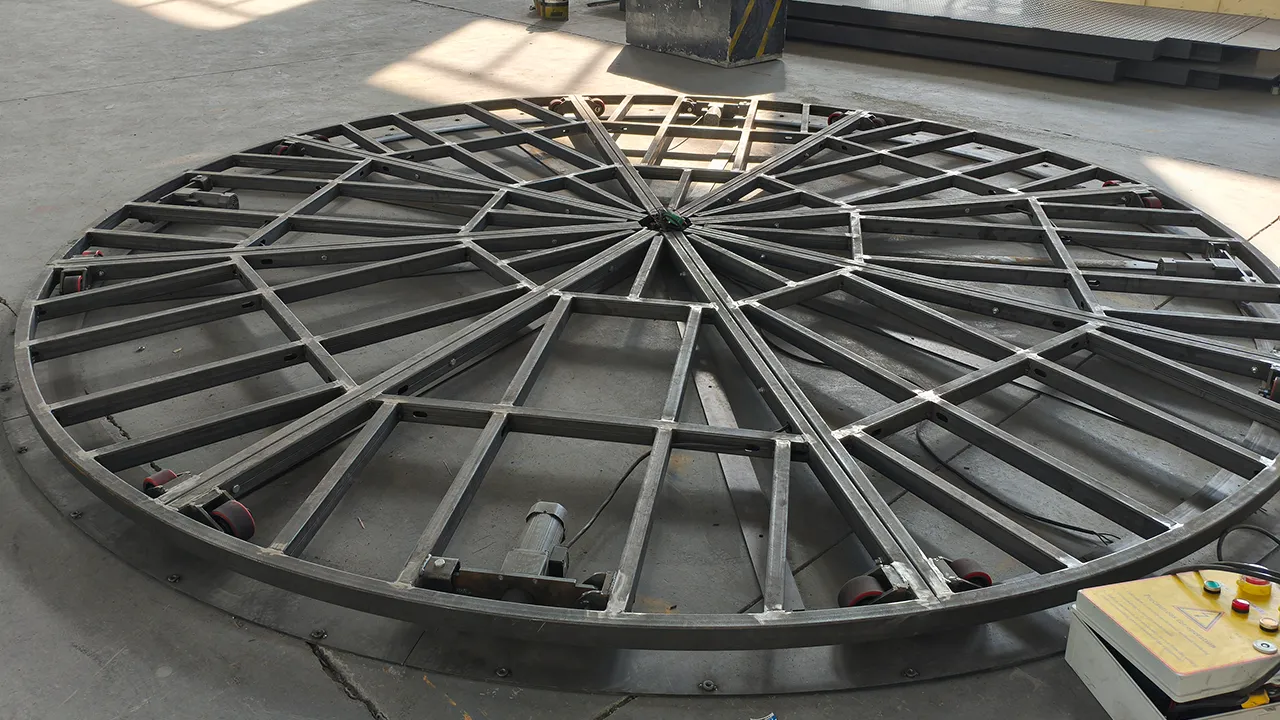
Pit-mounted: flush with the floor
A pit-mounted unit sits inside a cast concrete pit, so the platform finishes level with the surrounding surface.
Where it wins
- Space — nothing protrudes, so vehicles, forklifts and pedestrians pass over normally.
- Appearance — no visible frame or ramp, which is why villa driveways and showrooms almost always specify pit-mounted.
- Cleaner logistics — a loading dock or warehouse aisle keeps its full clear width.
What it demands
- Excavation before delivery. The pit has to be cast and cured before the unit arrives.
- Drainage. Any below-grade installation collects water. A sump, drain point and watertight lining are not optional — water ingress is the most common cause of early bearing and motor failure.
- Coordination. Pit dimensions, conduit positions for power and control, and the finished floor level all have to be right the first time.
For a scissor lift this style is often described as a pit mounted scissor lift — the scissor stack retracts entirely below floor level so only the platform surface is visible.
Surface-mounted: installed on top of your existing slab
A surface-mounted unit bolts down on top of an existing floor, with a short ramp so vehicles or trolleys can drive on.
Where it wins
- Speed. No excavation, no curing time. A surface-mounted turntable can be operational within days of arriving on site.
- Reversibility. If you relocate or refurbish, the unit lifts out.
- Cost. You avoid the civil works, which are often a significant share of a below-grade project.
What it costs you
- Height. The platform plus ramp adds 100–200 mm or more above the finished floor. That is fine in a workshop, and awkward in a finished showroom.
- Ramp length. Access has to be gentle enough for the vehicle or load, which consumes floor length you may not have.
- Tripping and drainage planning. The step edge needs to be visible and safe, and the surrounding floor still needs to drain away from the unit.
Side-by-side
| Pit-mounted | Surface-mounted | |
|---|---|---|
| Work above floor | None (flush) | 100–200 mm + ramp |
| Civil works | Excavation, pit, drainage | Anchor bolts only |
| Lead time on site | Longer (pit before delivery) | Days |
| Relocatable | Difficult | Yes |
| Best for | Villas, showrooms, tight aisles, loading docks | Workshops, rentals, retrofits |
| Main risk | Water ingress, pit dimensional errors | Ramp length, step edge safety |
How to decide
Work through these in order — the first “yes” usually settles it:
- Is there a finished floor you cannot cut? → surface-mounted.
- Is floor space so tight that a ramp would block circulation? → pit-mounted.
- Will the unit ever need to move? → surface-mounted.
- Is the visible result part of the design? → pit-mounted.
- Is there no realistic way to cast and drain a pit? → surface-mounted.
Get the pit right the first time
If you choose a pit, the drawing matters more than the machine. GPLIFT issues a dimensioned pit and conduit plan with every pit-mounted order, so the foundation can be built while the unit is in production rather than after it lands.
For a live example of a below-grade installation, see the underground recessed car turntable for a Dubai villa. If you are still choosing a turntable configuration, start with the car turntable buying guide and the turntable product range. For below-floor scissor applications, see the hydraulic scissor lift range.