Introduction
A dock leveler is one of the most important pieces of equipment at a loading dock. It bridges the gap between the dock floor and the truck bed, allowing forklifts to load and unload safely and efficiently. Choosing the right type of dock leveler affects your operation’s speed, safety, and maintenance costs.
This buying guide compares the three main types of dock levelers—hydraulic, mechanical, and air-powered—to help you make the right choice. If you are still deciding between a leveler and a powered lifting platform, start with the dock lift guide.
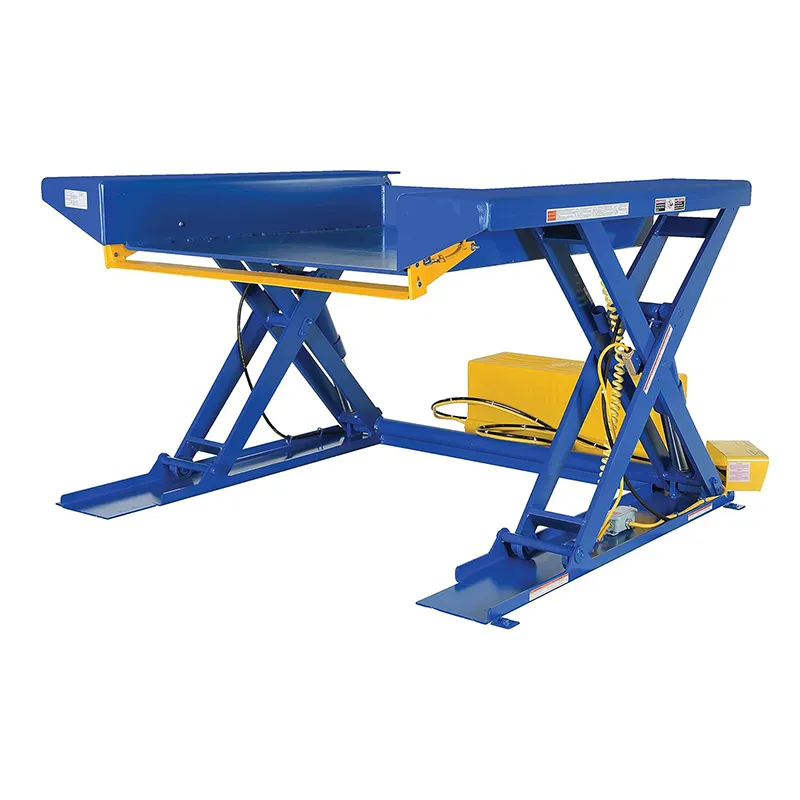
Types of Dock Levelers
Hydraulic Dock Levelers
Hydraulic levelers are operated with a push-button control that activates a hydraulic system to raise and lower the platform.
Advantages:
- Push-button operation, minimal operator effort.
- Smooth, controlled lip extension.
- Lowest maintenance of all types.
- Best for high-traffic facilities.
Considerations:
- Higher upfront cost.
- Requires electrical power supply.
Mechanical Dock Levelers
Mechanical levelers use a spring system to raise the platform. The operator walks the platform up and uses a pull chain to extend the lip.
Advantages:
- Lowest purchase price.
- No power supply required.
- Simple, proven design.
Considerations:
- Requires more operator effort.
- Higher maintenance over time.
- Best for low-to-moderate traffic.
Air-Powered Dock Levelers
Air-powered levelers use a pneumatic bag to raise the platform, operated with a push button.
Advantages:
- Easy push-button operation.
- Moderate cost between hydraulic and mechanical.
- Less maintenance than mechanical levelers.
Considerations:
- Requires compressed air supply.
- Medium maintenance requirements.
Capacity and Sizing
Choose a dock leveler capacity that matches your operation:
- Forklift + load weight: Consider the combined weight of your heaviest forklift and load.
- Safety margin: Add 20–30% above your calculated maximum.
- Typical range: 20,000 to 40,000 lbs, with heavy-duty options above that.
Key Features to Consider
- Platform length: Must bridge the gap between dock and truck bed.
- Lip length and range: Must accommodate different truck bed heights.
- Safe working load (SWL): Confirm the rated capacity.
- Weather seals: Important for refrigerated or weather-sensitive facilities.
- Dock bumpers and restraints: Work together with the leveler for safe loading.
Making the Right Choice
| Type | Best For | Cost | Maintenance |
|---|---|---|---|
| Hydraulic | High-traffic facilities | High | Low |
| Mechanical | Low-to-moderate traffic | Low | Medium |
| Air-Powered | Mid-range needs | Medium | Medium |
If your facility has high throughput and wants maximum reliability, a hydraulic dock leveler is worth the investment. For budget-conscious operations with lighter traffic, a mechanical leveler is a proven choice. If your operation needs to change the working height rather than just bridge a gap, compare a dock lift with a scissor lift in the dock lift vs scissor lift guide.
GP LIFT Loading Dock Solutions
GP LIFT offers hydraulic dock lifts and loading dock equipment engineered for efficient material handling. Our hydraulic dock lifts (1–10 ton) provide reliable, low-maintenance solutions for warehouses and logistics facilities, with customizable platform size and capacity. Whichever dock equipment you install, follow the dock lift safety guidelines for operation and inspection.
FAQ
What is the difference between hydraulic, mechanical, and air-powered dock levelers?
Hydraulic levelers use a push-button hydraulic system, mechanical levelers use springs and are the most economical, and air-powered levelers use a pneumatic bag with medium cost and maintenance.
Which dock leveler type is most reliable?
Hydraulic dock levelers are generally the most reliable and require the least maintenance, making them ideal for high-traffic facilities.
How much capacity do I need for my dock leveler?
Choose a leveler with capacity matching your heaviest forklift and load combination, typically 20,000 to 40,000 lbs, plus a safety margin.
What is the difference between a dock leveler and a dock lift?
A dock leveler only bridges the small height gap between the dock edge and the trailer bed, keeping the load at roughly the same level. A dock lift is a powered hydraulic platform with 1.2 to 3 m of travel that raises or lowers the whole load to a different working height.
Do I need a dock leveler if I already have a dock lift?
Often yes, because they solve different problems: the leveler adapts the bay to different trailer heights, while the lift sets the working height for the load. Many busy bays use a leveler for the vehicle interface and a dock lift for vertical transfer.
What maintenance does a dock leveler need?
Keep the pit and lip clear of debris, lubricate hinges and pivots on schedule, check hydraulic hoses and the power unit on hydraulic models, inspect springs and mechanical linkages on mechanical models, and confirm bumpers and restraints are in good condition.