Introduction
Most lifting duties can be served by a catalogue model. Some cannot. When the load, the shaft, the floor level or the operating environment falls outside the standard envelope, custom lifting solutions close the gap.
This guide is about the engineering side of that decision: what actually gets changed, what should stay standard, how the process runs, and how to brief a supplier so the first quotation is usable rather than a list of questions.
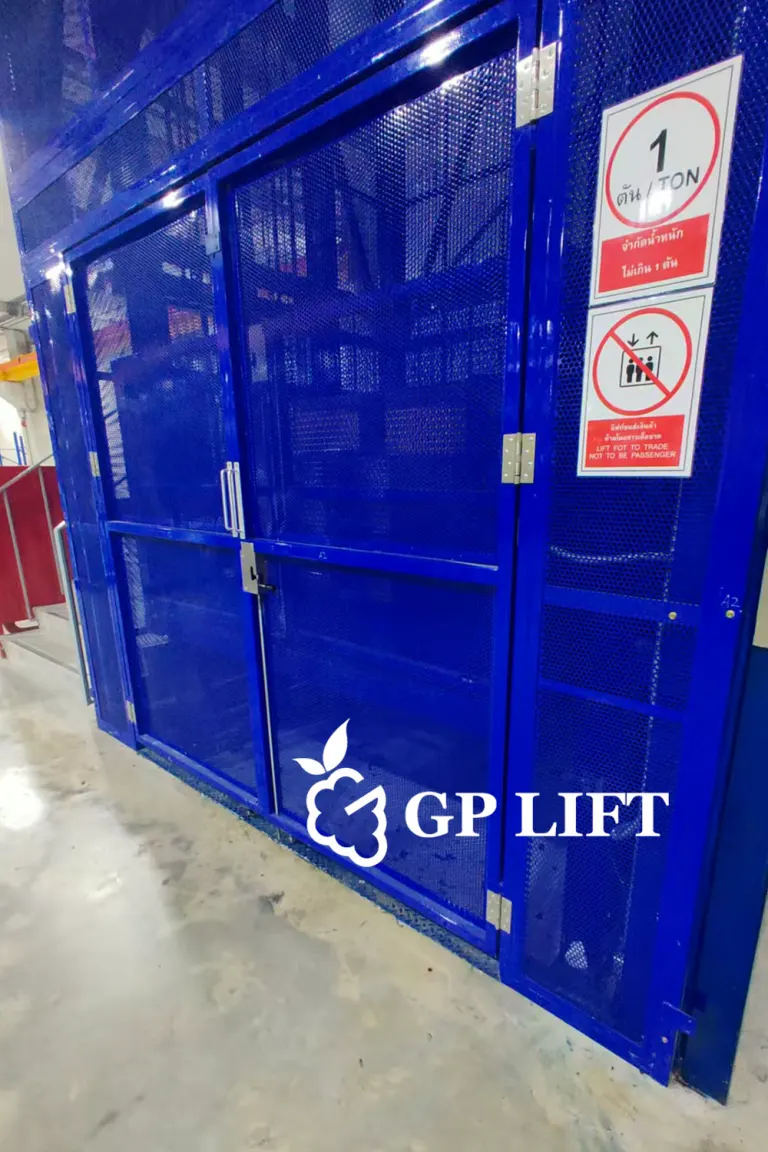
What custom lifting solutions actually means
The phrase covers a wide range of work, from a single changed dimension to a machine that shares almost nothing with the catalogue. In practice it falls into three levels:
| Level | What changes | Typical trigger |
|---|---|---|
| Partial customization | Platform size, stop positions, finish, controls | A standard model fits the duty but not the site |
| Adapted design | Load rating, travel, structure or drive resized | Standard range stops short of the requirement |
| Fully bespoke | New structure, new mechanism, new envelope | No catalogue product can meet the duty |
Knowing which level you need matters, because the cost and lead time step up sharply between them. A project that only needs a wider platform should not be quoted as a new machine.
When a standard lift will not do
Work through this list before assuming you need custom work:
- The platform does not fit the shaft or opening. Width, depth or the relationship between the two is outside the catalogue range.
- The load is outside the standard rating, or the load is uneven, off-centre or concentrated on a small footprint.
- The travel height or stop pattern is unusual — for example a lift that must serve three levels with different clearances rather than two.
- The environment is hostile: washdown, corrosive atmosphere, explosion-proof zones, outdoor exposure or a noise-sensitive building.
- The interface is fixed: an existing opening, a listed facade, a floor that cannot be cut, or a building that cannot take the reaction loads of a standard frame.
- You need OEM/ODM branding for your own market.
If none of those apply, a standard unit with a small margin is almost always the better buy.
Customized lift solutions and how they differ from modifications
You will also see the phrase customized lift solutions. Functionally it is the same work; the difference is mostly where the wording appears. “Custom lifting solutions” is the more common form in English tenders and specification documents, while “customized lift solutions” turns up more often in translated RFQs and in enquiries from buyers who are adapting an existing design.
The distinction that actually matters is design adaptation versus field modification:
| Customized lift solution | Field modification | |
|---|---|---|
| Where the change is decided | Engineering, before manufacturing | On site, after delivery |
| Drawings and load calculations | Issued and approved | Rarely updated |
| Warranty and certification | Covers the modified design | Often void for the altered part |
| Cost | Higher upfront | Lower upfront, higher lifetime risk |
A lift that is cut, extended or re-rated on site is not a customized solution. It is a standard unit outside its design envelope, and it should not be treated as equivalent.
What can be customized
Load and platform
Capacity and platform geometry are the two changes that drive everything else. Increasing capacity usually means a heavier structure, a larger hydraulic package and a different reaction load at the floor; increasing platform size changes the bending case even at the same capacity.
Platform shape is often the cheaper lever. A rectangular, L-shaped or recessed platform that matches the actual load footprint can avoid oversizing the whole machine.
Travel and stops
Travel height, the number of stops and the clearance at each level are all design inputs. Multi-level service — a lift that opens at two or three floors rather than one — is one of the most common reasons a project leaves the catalogue. Related: the installation checklist covers the site data that has to be confirmed before those stops are fixed.
Materials and finish
Stainless steel, galvanised structures, epoxy finishes and washdown-rated components are specified for food, cold-store, coastal and outdoor installations. The finish is usually driven by the cleaning regime rather than by appearance.
Special functions
- Explosion-proof components for hazardous zones.
- Low-noise hydraulic units for hospitals, hotels and residential buildings.
- Turntable or rotating platforms where the load must be reoriented — see the car turntable buying guide.
- Fast-speed operation for high-throughput logistics.
- Pit-mounted or surface-mounted installation, decided by whether the floor line must stay flush; the trade-offs are compared in pit-mounted vs surface-mounted lifts.
Branding and OEM/ODM
Private labelling, custom colour and market-specific specifications are common for distributors. This is a documentation and finishing change rather than a structural one, and it is the cheapest form of customization to add to an existing design.
What stays standard, and why that matters
Good custom work reuses as much proven design as possible. A pump unit, valve block, control system or safety circuit that is already in series production carries a known failure history; a new one does not.
The practical rule: customize what touches the site, standardize what touches reliability. Change the platform and the frame if the shaft demands it. Keep the hydraulic package and the safety chain on a proven platform unless the duty genuinely requires otherwise.
This is also why a partial customization often beats a full redesign — you get the fit without giving up the field history.
The engineering process
A custom project moves through a sequence that is worth knowing before you ask for a price:
- Requirement capture. Load, platform size, travel, stops, environment and interface.
- Site data review. Shaft dimensions, floor strength, headroom, drainage and access for installation.
- Concept and CAD. A layout drawing showing the unit in your space, plus a 3D view for stakeholder review.
- Engineering review. Structural and hydraulic calculations against the agreed duty.
- Drawing approval. The point where cost and schedule are effectively fixed.
- Manufacturing and quality control.
- Factory inspection and shipment.
- Installation support and handover documentation.
Most schedule slippage happens at steps 2 and 5. Missing site data delays the concept; slow drawing approval delays everything after it.
What custom does to cost and lead time
Custom work costs more than a catalogue unit, for three reasons: engineering hours, non-standard components, and a production slot that cannot be batched with a standard run.
The honest comparison is not “custom price versus catalogue price”. It is total installed cost:
- A catalogue unit that does not fit may require civil works, a modified opening or a second machine to cover the duty.
- A custom unit may remove those costs and shorten commissioning.
For a project with a fixed shaft, the custom option is frequently the cheaper one once the building work is counted. For a project that only needs a marginally different finish, it usually is not.
How to brief a supplier so the first quote is usable
Send these seven items and the first reply is usually a price rather than a question list:
- Rated load, including the heaviest single item and any concentrated load.
- Platform size and shape, with the load footprint.
- Travel height and number of stops, with clearances at each level.
- Mounting type — pit or surface — and the finished floor condition.
- Environment: indoor, outdoor, washdown, corrosive, explosion-proof zone.
- Interface constraints: opening size, headroom, floor strength, access for delivery.
- Volume and branding: one unit, a series, OEM/ODM requirements.
If you are still choosing between a standard and a custom unit, the selection guide works through the standard range first — and the buying checklist covers the comparison points across lift types.
Common mistakes
- Specifying a custom machine for a catalogue duty. It adds cost and lead time for no benefit.
- Changing the structure without re-checking the floor. Reaction loads move when the frame changes.
- Treating OEM branding as an engineering change. It is a documentation and finish change; do not let it delay the design review.
- Approving drawings late. Everything downstream waits on that approval.
- Modifying on site. A cut-down or extended unit is outside its certified envelope.
Related reading
- Cargo lift selection guide — start with the standard range
- Cargo lift installation checklist — the site data a custom design depends on
- Pit-mounted vs surface-mounted lifts — the mounting decision
- Mezzanine cargo lifts — the two-level case that often stays standard
- 3.5 t double-deck car lift for Vietnam — a 2.6 × 5.7 m platform with 2.5 m travel
- 5 t scissor dock lift for the Philippines — dock interface and capacity adaptation
FAQ
When should I choose a custom lift instead of a standard model?
Choose custom when the load, platform dimensions, lifting height or site conditions do not match a standard model, or when you need OEM/ODM branding. If a catalogue unit covers the duty with a small margin, buy the catalogue unit.
What can be customized on a hydraulic lift?
Load capacity, platform size and shape, travel height and stop positions, materials and finish, safety features, control arrangement, and special functions such as explosion-proof or low-noise designs.
Does a custom lift cost more than a standard one?
Usually yes, because engineering and non-standard components sit outside the catalogue price. The trade-off is a unit that fits the site, which often removes civil works, rework or a second machine.
What is the difference between custom lifting solutions and customized lift solutions?
Nothing functional. Both describe adapting a lift design to a specific duty. Custom lifting solutions is more common in English tenders; customized lift solutions appears more often in translated specifications and RFQs.
How long does a custom lift project take?
Longer than a catalogue order, because design review, drawing approval and non-standard component procurement come first. The schedule is driven by how quickly the site data and drawing approval are settled, not by the factory alone.
Can a standard lift be partially customized?
Yes, and this is often the best value. A standard platform and drive with a custom platform size, stop arrangement or finish keeps most of the design proven while fixing the part that did not fit.
Does GP LIFT provide CAD drawings before ordering?
Yes. Custom projects start with a layout drawing showing the unit in your space, plus a 3D view for review, so the fit and the stop positions can be checked before manufacturing.